



S1PR5
S1PR5 is an S1P-activated GPCR that links sphingolipid signaling to oligodendroglial morphology, survival, immune-cell trafficking, and blood-brain barrier biology[1]. In oligodendroglial cells, Edg8/S1P5 activation controls two stage-dependent pathways: Rho-kinase-associated process retraction in immature cells and pertussis-toxin-sensitive Akt-dependent survival in mature oligodendrocytes[2]. Mechanistically, S1P5 also inhibits oligodendrocyte progenitor migration, supporting its use in myelination and oligodendrocyte lineage models[3]. In immune models, S1P5 controls natural killer cell egress from lymph nodes and bone marrow, while S1PR5 regulates T cell infiltration, emigration, and tissue-resident lymphocyte retention[4]. In human brain endothelial cells, S1P5 contributes to optimal barrier formation and maintenance of immune quiescence, linking this receptor to neuroinflammation and multiple sclerosis-relevant blood-brain barrier research[5]. Compared with related isoforms, S1PR5 differs from S1PR1 because S1PR1 couples exclusively with Gi/o, whereas S1PR5 couples with Gi/o and G12/13[6]. Structural studies of S1PR1 and S1PR5 further define subtype-selective activation and drug recognition, supporting isoform-focused ligand design[6][7]. For experimental applications, A-971432 provides an orally bioavailable selective S1P5 agonist, while selective S1P5 antagonists enable pharmacological interrogation of immune and CNS cell functions[8][9].
References:
- [1]. Im DS, et al. Characterization of a novel sphingosine 1-phosphate receptor, Edg-8. J Biol Chem. 2000 May 12;275(19):14281-6. [Content Brief]
- [2]. Jaillard C, et al. Edg8/S1P5: an oligodendroglial receptor with dual function on process retraction and cell survival. J Neurosci. 2005 Feb 9;25(6):1459-69. [Content Brief]
- [3]. Novgorodov AS, et al. Activation of sphingosine-1-phosphate receptor S1P5 inhibits oligodendrocyte progenitor migration. FASEB J. 2007 May;21(7):1503-14. [Content Brief]
- [4]. Evrard M, et al. Sphingosine 1-phosphate receptor 5 (S1PR5) regulates the peripheral retention of tissue-resident lymphocytes. J Exp Med. 2022 Jan 3;219(1):e20210116. [Content Brief]
- [5]. van Doorn R, et al. Sphingosine 1-phosphate receptor 5 mediates the immune quiescence of the human brain endothelial barrier. J Neuroinflammation. 2012 Jun 20;9:133. [Content Brief]
- [6]. Yuan Y, et al. Structures of signaling complexes of lipid receptors S1PR1 and S1PR5 reveal mechanisms of activation and drug recognition. Cell Res. 2021 Dec;31(12):1263-1274. [Content Brief]
- [7]. Lyapina E, et al. Structural basis for receptor selectivity and inverse agonism in S1P5 receptors. Nat Commun. 2022 Aug 12;13(1):4736. [Content Brief]
- [8]. Hobson AD, et al. Discovery of A-971432, An Orally Bioavailable Selective Sphingosine-1-Phosphate Receptor 5 (S1P5) Agonist for the Potential Treatment of Neurodegenerative Disorders. J Med Chem. 2015 Dec 10;58(23):9154-70. [Content Brief]
- [9]. Ma B, et al. Novel Potent Selective Orally Active S1P5 Receptor Antagonists. ACS Med Chem Lett. 2021 Jan 15;12(3):351-355. [Content Brief]
-
S1PR5 Related Products (15)
Related Products (15)

- 1
-
Siponimod
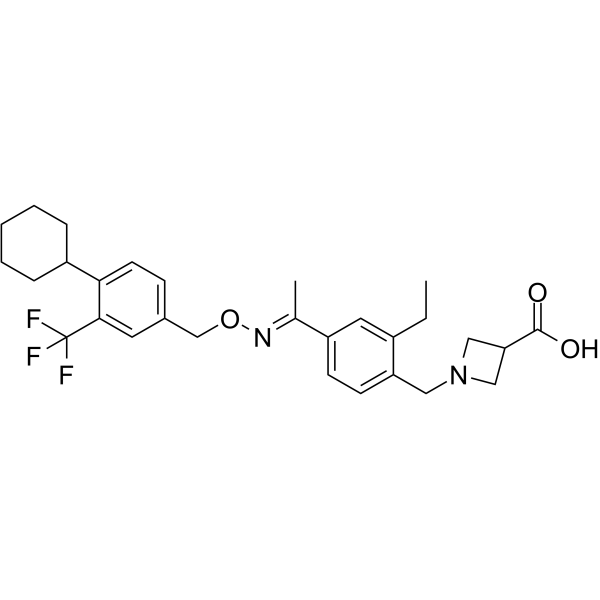 0 ImagesSynonyms: BAF-312Siponimod (BAF-312) is an orally active, blood-brain barrier penetrant dual agonist of S1P1/S1P5, with EC50 values of 0.39 nM and 0.98 nM, respectively. Siponimod induces S1P1 internalization, activates GIRK channels, inhibits lymphocyte egress, reduces peripheral lymphocyte counts, triggers transient bradycardia, prevents synaptic neurodegeneration, promotes remyelination, alleviates demyelination, and prevents the loss of GABAergic interneurons. Siponimod can be used in research related to multiple sclerosis.
-
Ozanimod
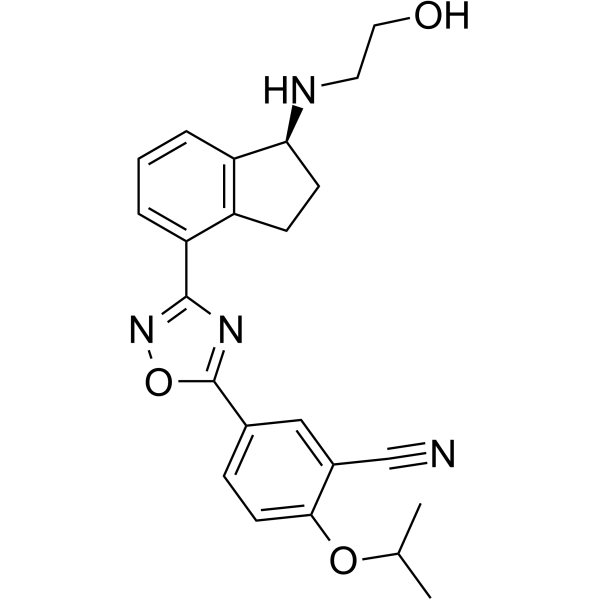 0 ImagesSynonyms: RPC-1063Ozanimod (RPC-1063) is a CNS-penetrant sphingosine 1-phosphate (S1P) receptor modulator that binds with high affinity selectively to S1P receptor subtypes 1 (S1P1) and 5 (S1P5). Ozanimod has modulate effect for hS1P1 and hS1P5 receptor with EC50s of 1.03 nM and 8.6 nM, respectively. Ozanimod can be used for the research of relapsing multiple sclerosis (MS).
-
Ponesimod
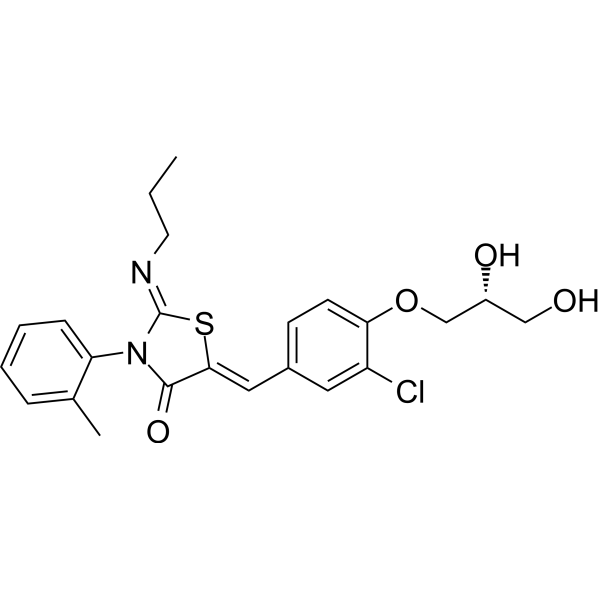 0 ImagesSynonyms: ACT-128800Ponesimod (ACT-128800) is a potent, selective and orally active agonist of S1P1, with an IC50 of 6 nM in a radioligand binding assay. Ponesimod activates S1P1-mediated signal transduction with high potency (EC50=5.7 nM). Ponesimod can protect against lymphocyte-mediated tissue inflammation.
-
CYM-5478
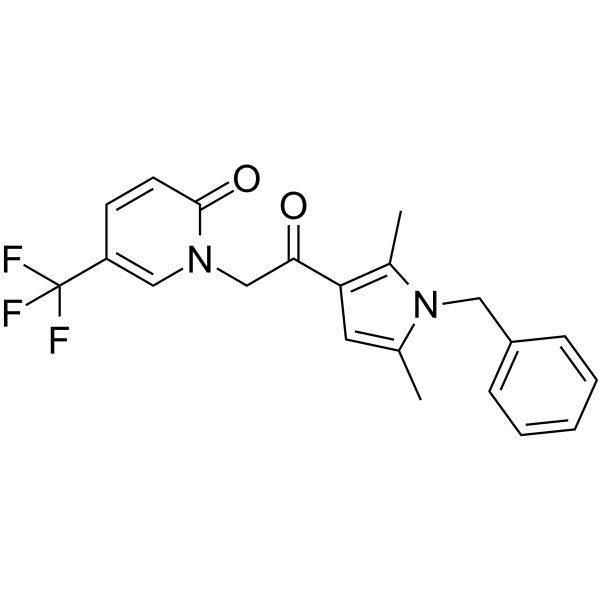 0 ImagesCYM-5478 is a potent and highly selective S1P2 agonist with an EC50 of 119 nM in a TGFα-shedding assay. CYM-5478 protects neural-derived cell lines against Cisplatin toxicity.
-
Ozanimod hydrochloride
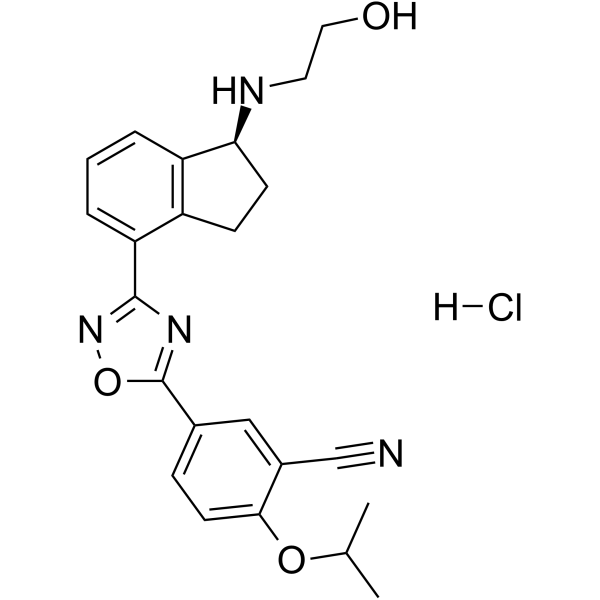 0 ImagesSynonyms: RPC-1063 hydrochlorideOzanimod (RPC-1063) hydrochloride, a sphingosine 1-phosphate (S1P) receptor modulator that binds with high affinity selectively to S1P receptor subtypes 1 (S1P1) and 5 (S1P5). Ozanimod hydrochloride has modulate effect for hS1P1 and hS1P5 receptor with EC50s of 1.03 nM and 8.6 nM, respectively. Ozanimod hydrochloride can be used for the research of relapsing multiple sclerosis (MS) .
-
Cenerimod
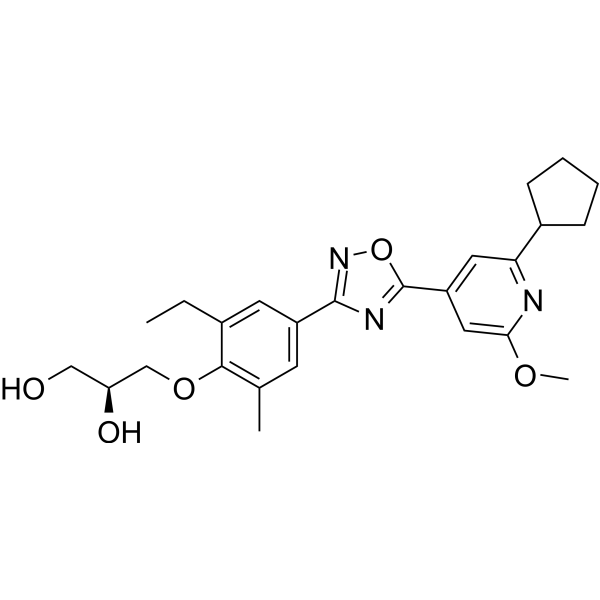 0 ImagesSynonyms: ACT-334441Cenerimod (ACT-334441) is a potent, selective and orally active S1P1 receptor modulator, with an EC50 of 1 nM. Cenerimod shows more than 36 fold selctivity for hS1P1 over hS1P2, hS1P3, hS1P4, and hS1P5 receptor subtypes (EC50s=>10000, 228, 2134, and 36 nM, respectively). Cenerimod can attenuate murine experimental autoimmune encephalomyelitis (EAE) and murine sclerodermatous.
-
S1PR5-IN-1
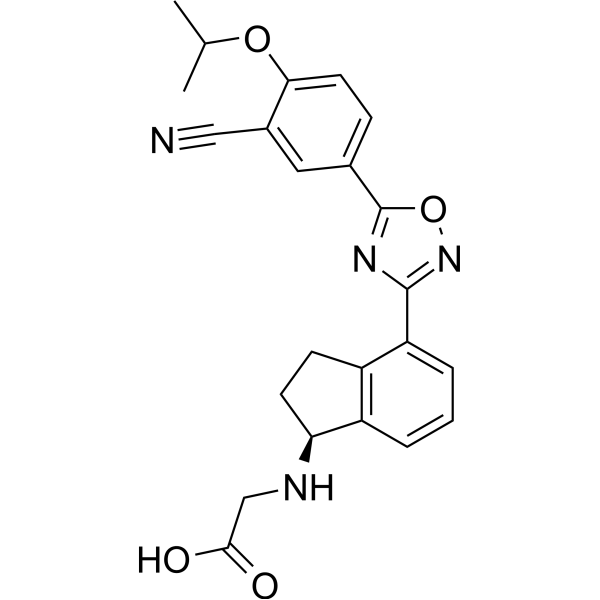
 0 ImagesS1PR5-IN-1 (Compound 7a) is a highly selective S1PR5 antagonist and orally bioavailable inhibitor with a human S1PR5 IC50 of 85.4 nM and human S1PR5 Kd of 2.173 nM.S1PR5-IN-1 binds to S1PR5 and inhibits natural killer cell migration toward sphingosine-1-phosphate.S1PR5-IN-1 can be used for the research of multiple sclerosis.
-
Siponimod hemifumarate
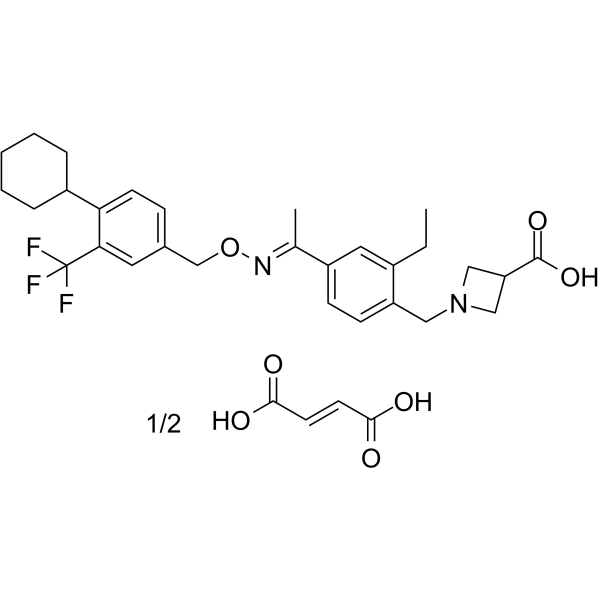 0 ImagesSynonyms: BAF-312 hemifumarateSiponimod (BAF-312) hemifumarate is an orally active, blood-brain barrier penetrant dual agonist of S1P1/S1P5, with EC50 values of 0.39 nM and 0.98 nM, respectively. Siponimod hemifumarate induces S1P1 internalization, activates GIRK channels, inhibits lymphocyte egress, reduces peripheral lymphocyte counts, triggers transient bradycardia, prevents synaptic neurodegeneration, promotes remyelination, alleviates demyelination, and prevents the loss of GABAergic interneurons. Siponimod hemifumarate can be used in research related to multiple sclerosis.
-
RP101075
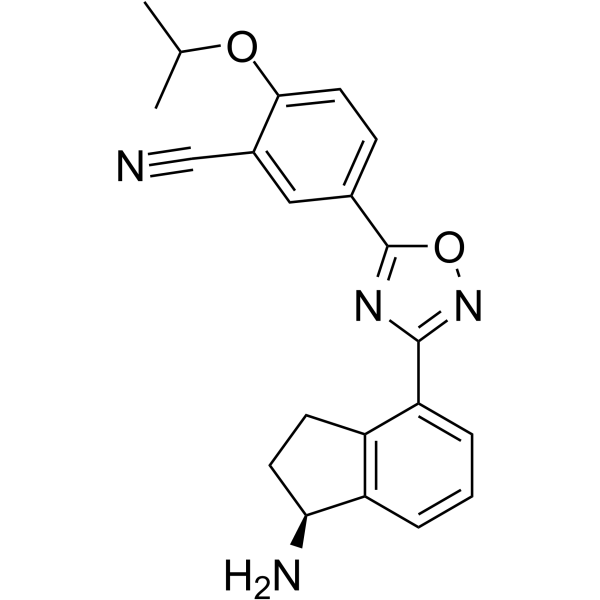 0 ImagesRP101075, an active metabolite of Ozanimod, is a potent, orally active S1PR (sphingosine-1-phosphate receptor 1) agonist, with an EC50 of 0.27 nM. RP101075 displays >100-fold selectivity over S1PR5 (EC50=5.9 nM) and >10000-fold over S1PR 2, 3, and 4. RP101075 displays superior cardiovascular safety profile.
-
S1p receptor agonist 2
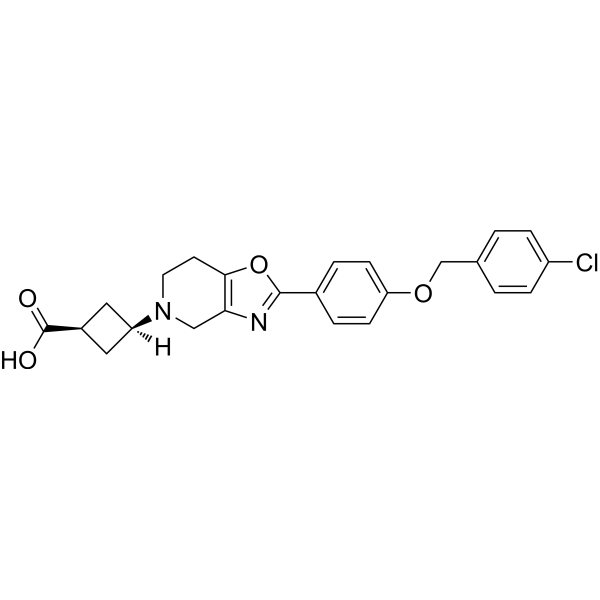 0 ImagesCat. No.: HY-148115CAS No.: 1354908-17-0S1p receptor agonist 2 (compound 1) is an agonist of S1P5 receptor, exhibits selectivity over the S1P1 and/or S1P3 receptors. S1p receptor agonist 2 can be used for endogenous SIP signaling system research, and alleviating or preventing CNS disorders research, such as neurodegenerative disorders.
-
S1P5 receptor agonist-1
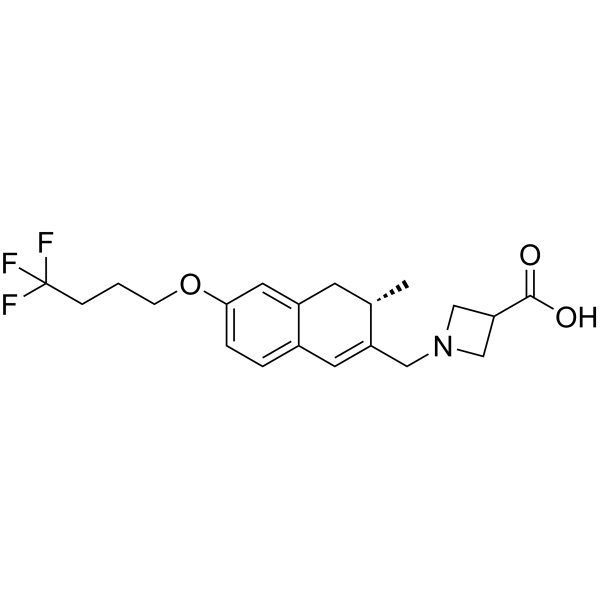 0 ImagesCat. No.: HY-148198CAS No.: 2373330-78-8S1P5 receptor agonist-1 (Example 6) is an effective and selective S1P5 receptor (S1P5 receptor) agonist. The EC50 values for S1P5 and S1P1 receptors are 20 nM and > 3 μM, respectively. S1P5 receptor agonist-1 can be used in studies on neuroprotection and immune regulation.
-
AMG 369
 0 ImagesCat. No.: HY-14402CAS No.: 1202073-26-4AMG 369 is an orally active and potent dual S1P1/S1P5 agonist with limited activity at S1P3 and no activity at S1P2/S1P4. AMG 369 reduces blood lymphocyte counts. AMG 369 delays onset and reduces severity of experimental autoimmune encephalomyelitis in rat.
-
S1PR1/S1PR5 agonist-1
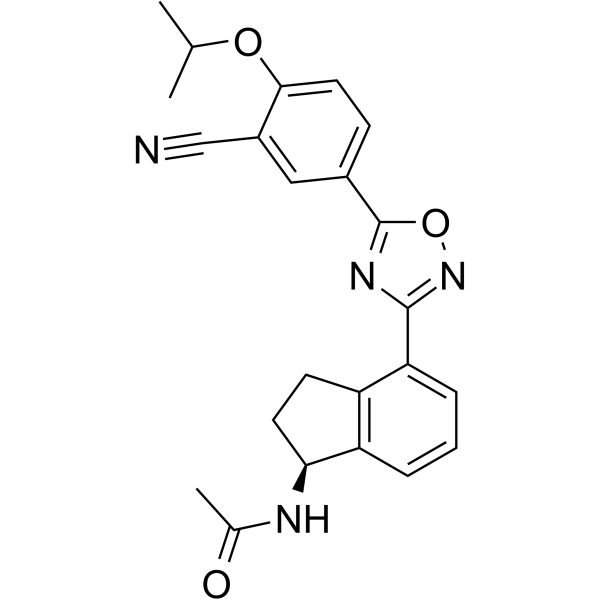
 0 ImagesCat. No.: HY-181875S1PR1/S1PR5 agonist-1 (Compound 19) is an orally active S1PR1 and S1PR5 agonist with EC50 values of 40.0 and 22.9 nM, respectively. S1PR1/S1PR5 agonist-1 binds to key residues of S1PR1 to mediate agonistic activity. S1PR1/S1PR5 agonist-1 alleviates colitis pathological changes in DSS-induced mouse models and exerts minimal effects on mouse heart rate. S1PR1/S1PR5 agonist-1 can be used for the research of inflammatory bowel disease.
- 1



